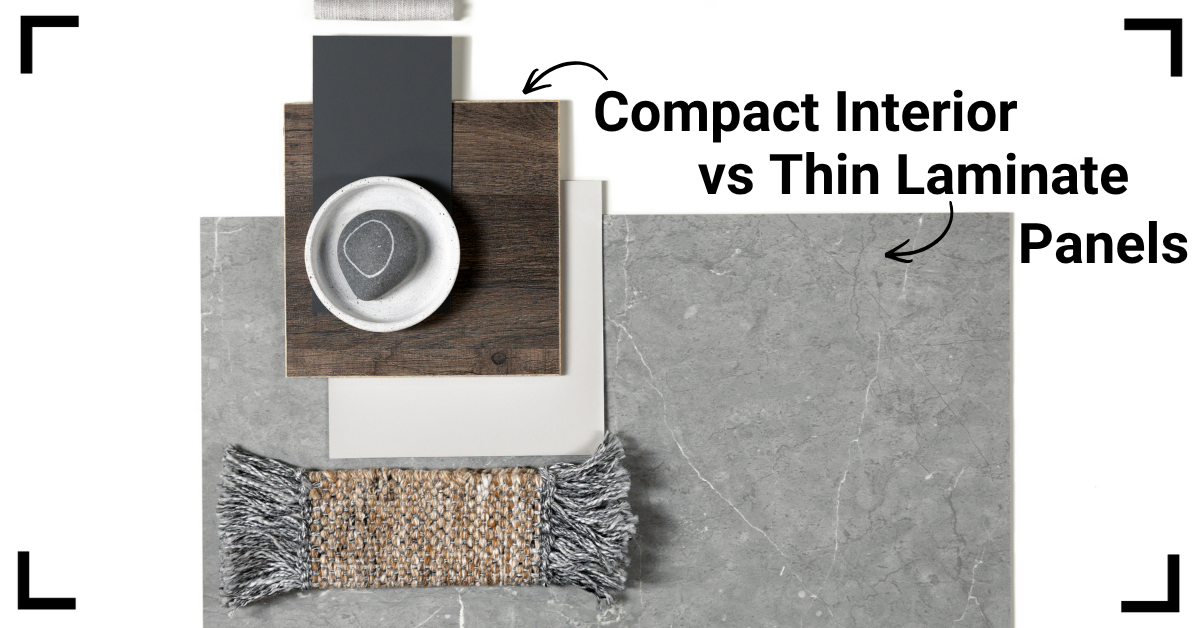
When design teams hear “high-pressure laminate,” or HPL, they may imagine a decorative, thin laminate material that covers existing interior substrates. This can lead to misconceptions around Fundermax’s phenolic panels, specifically Max Compact Interior.
Because phenolic panels are growing in popularity in the commercial building industry, we understand why the interchangeability of these terms could lead to confusion.
While Fundermax offers each product line, there are distinctions between each material’s performance, applications, spec considerations, and more. In this blog, we’ll provide a comprehensive comparison between 1mm (1/32") HPL and Max Compact Interior phenolic panels.
Jump to a specific section:
How Are High-Pressure Laminates Made?
High-pressure laminates are created by compressing layers of kraft paper impregnated with thermosetting resins, then bonded under high heat and pressure. Phenolic resin is the basis of most high-pressure laminates, which is why these terms are sometimes used interchangeably. This process creates two products:
Decorative Thin Laminate HPL Panels
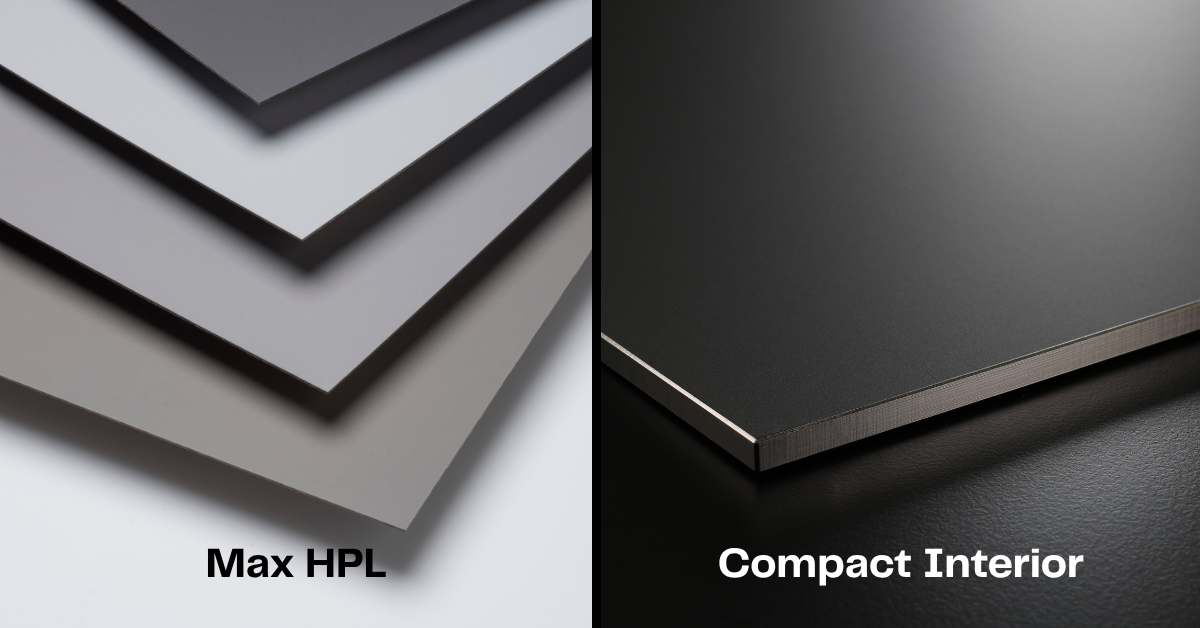
Thin laminate HPL panels are 1mm-thick (1/32") decorative laminates used as a surface finish or covering. The material’s composition results in a thin, flexible sheet.
Because the panels show the decor on one side, they must be adhered to or laid up on substrates such as MDF, plywood, or particleboard.
Compact Phenolic Panels
Fundermax’s compact phenolic panels are manufactured with several layers of core paper and one layer of decor paper on each side. The panel’s layers are each saturated in resin, resulting in a dense, double-sided solid panel with inherent durability.
We produce a range of compact panel thicknesses - from 4 mm (5/32") to 20 mm (13/16") - for a variety of project needs.
While each of these materials comes from the same laminate technology and is produced at our ISO-accredited manufacturing sites in St. Veit/Glan and Neudörfl, Austria, they serve different roles in design and construction. Understanding their differences and uses helps determine the best material for a specific project’s needs.
What Are the Differences Between Max Compact Interior and HPL Thin Laminate?
There are several considerations and unique qualities that are important to understand when deciding between compact phenolic and HPL panels:
Durability and Longevity
Thin Laminate HPL
The manufacturing process of HPL makes the material resistant to scratches, graffiti, heat, and chemicals, and due to its non-porous nature, it is exceptionally easy to clean.
Thin laminate HPL panels provide surface strength, but structural stability, waterproofness, and resistance will largely depend on the substrate. For this reason, thin laminate HPL is not recommended for high-moisture installations.
The service life of thin laminate HPL is roughly 5-15 years, depending on substrate, environment, and maintenance.
Max Compact Interior
Max Compact Interior phenolic panels offer the same surface qualities as thin laminate HPL panels, with the added benefit of advanced impact resistance.
The material features a water-resistant core, making it suitable for wet environments like locker rooms, restrooms, and healthcare environments.
This added structural stability gives the panels high longevity and minimal maintenance, with a service life of around 30-40 years.
Fire Rating & Code Compliance
Thin Laminate HPL
A Class A fire rating is achievable with thin laminate HPL panels when the laminate, adhesive, and substrate are tested together as a complete system to ASTM E84, making proper material selection and installation planning essential from the start.
Max Compact Interior
Max Compact Interior panels are ASTM E84 tested to evaluate flame spread index and smoke development.
Max Compact panels achieve Class A ratings at thicknesses of 13 mm (1/2") and above, making the material highly fire-resistant. For applications using compact panels with thicknesses smaller than 13mm (1/2"), F-quality panels are recommended in order to achieve a Class A fire rating.
Design Options
Thin Laminate HPL
Fundermax’s thin HPL panels are available in 210+ decors across a variety of solid, woodgrain, and material tones. This range of aesthetic options allows architects to add unique aesthetic characteristics to their interior substrates.
However, much of the actual design capability beyond the decor is dependent on the panel size and substrate layout.
Max Compact Interior
Fundermax’s Max Compact Interior panels are also available in over 210+ decor options, across solid, woodgrain, and material options.
The key difference in design freedom with Max Compact is the various panel finishes, sizes, cores, and thicknesses to meet your project’s design and technical goals.
Unlike HPL, Max Compact Interior is available in multiple core colors - Black (standard), White, Pastel Grey, Charcoal Grey, and Brown (for woodgrain decors only) - a distinctive Fundermax advantage that ensures a seamless, refined look all the way to the panel's edge, and one you won't find as a standard offering across all manufacturers.
Fundermax offers four distinct finishes: Standard (FH), Matte (MT), Super Gloss (SG), and Aptico (AP). These each provide a unique surface appearance, elevating designs beyond decor alone.
With Individualdecor, Max Compact Interior goes beyond the standard - offering custom, digitally printed panels that make every space genuinely one of a kind.
.png?width=920&height=481&name=HPL%20vs%20Compact%20featured%20image%20(1).png)
Fabrication & Flexibility
Thin Laminate HPL.
Decorative Thin Laminate HPL sheets are flexible and can be easily bonded to substrates.
Consider that fabrication costs with thin laminate HPL panels will involve the substrate, increasing complexity, and fabrication costs. It involves glue lines, a balancing backer sheet, press time, fabrication time, and edge-banding, each required for protection against moisture and wear.
Max Compact Interior
Compact panels do not require edge banding like HPL. Because the material is homogeneous, Max Compact Panels offer more flexibility and ease of fabrication with the right tools.
The material is CNC-machinable for perforations and engravings, and can even be shaped into unique furniture applications such as tabletops and benches.
Installation
Thin Laminate HPL
There are several steps when installing thin laminate HPL:
-
Prepare substrate
-
Apply adhesive
-
Bond laminate to substrate
-
Roll and press
-
Trim edges
-
Edge banding
Pay close attention to these steps, as the material can delaminate if poorly installed.
As a surface covering, thin laminate HPL is often installed during cabinet or furniture manufacturing.
Adhesive is used to apply the material to prepared substrates and is rolled and pressed to ensure smooth application. Edge banding is required on the substrate for a cohesive aesthetic.
Max Compact Interior
Max Compact Interior panels simplify installation by functioning as a self-supporting material rather than a surface covering. Instead of relying solely on adhesives, panels are installed using mechanical fastening systems that provide long-term structural reliability.
Fundermax offers concealed, exposed, and Modulo plank fastening systems, providing architects with versatility in design layout. For ease of installation, Max Compact panels can be delivered prefabricated to size from the factory.
Relative Cost
Thin Laminate HPL
The material cost for thin HPL is relatively low up front, making it an attractive option at the specification stage for applicable projects.
However, the multistep assembly of Thin Laminate HPL, including the decorative sheet, a glue line, a substrate, an additional glue line, a balancing backer sheet, press time, fabrication time, and edge-banding, can increase the total cost of ownership (TCO).
Max Compact Interior
Max Compact Interior panels have a higher relative cost due to more material and specialized manufacturing.
However, in the long-term, more material means more durability, strength, and longevity. Consider that low maintenance means you avoid repair or replacement costs.
Because Max Compact panels can be prefabricated, you also save on labor costs for specialized applications.
Warranty
Thin Laminate HPL
Warranty coverage for thin laminate HPL varies widely across the industry - from no warranty at all to limited 1-year offerings. Fundermax stands behind our Max HPL product with a 6-month warranty and the quality, service, and expertise of a manufacturer trusted in the industry for over 130 years.
Max Compact Interior
Max Compact Interior panels have a warranty span of 2-10 years, depending on the application.
In wall lining applications, Max Compact Interior panels offer a 10-year warranty.
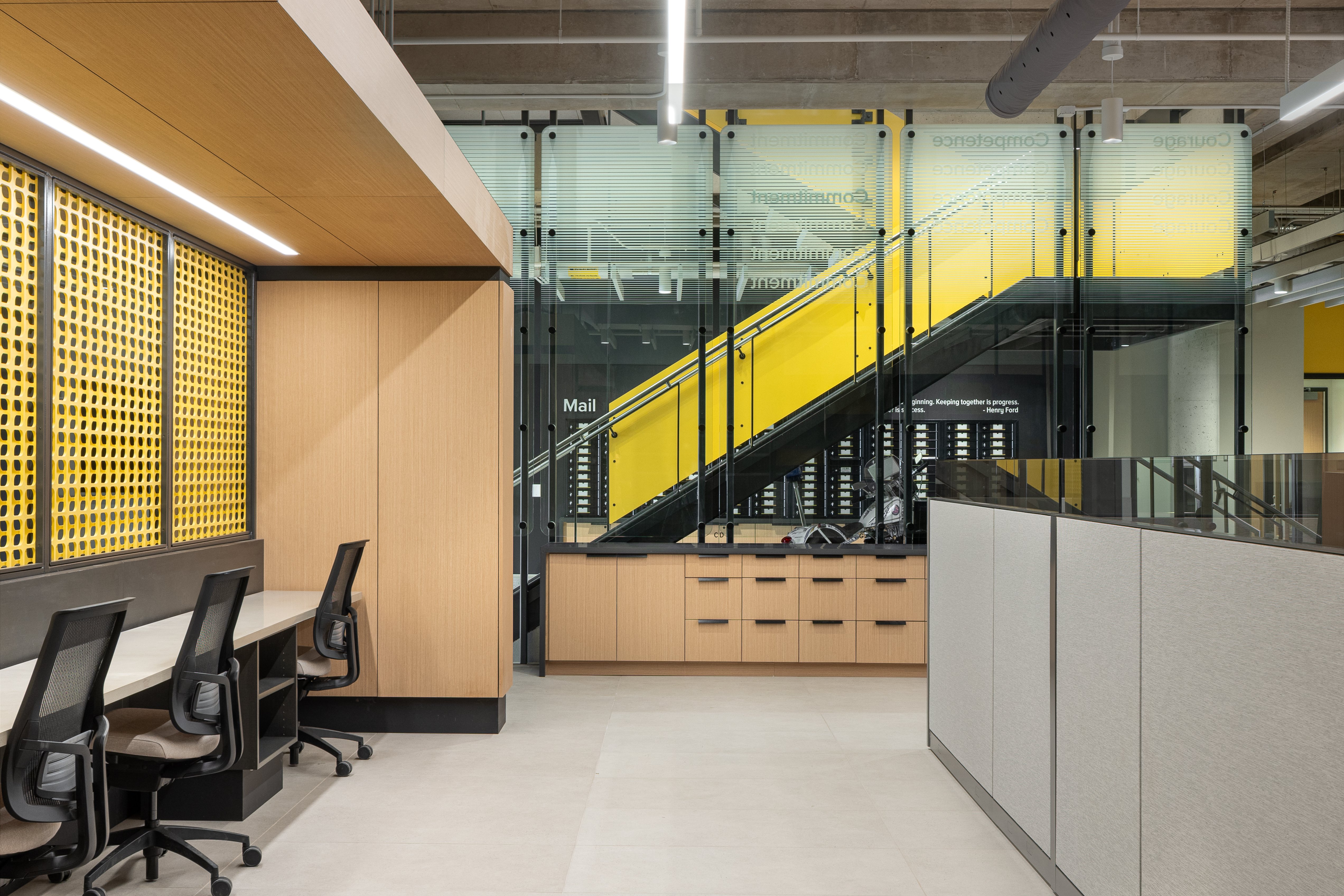 Mount Juliet Police Department in Mount Juliet, Tennessee, by Architect Workshop
Common Specification Mistakes to Avoid for Each
Understanding the differences between thin laminate HPL and Max Compact Interior goes beyond material selection - it extends to how each material is specified, detailed, and installed.
Being aware of these common mistakes early helps prevent premature failure or costly corrections at the time of bid.
Thin Laminate HPL Specification Errors
Specifying thin HPL in high-impact environments
- Using moisture-sensitive substrates in wet areas
- Incorrect adhesive selection
- Failing to test the complete system assembly - adhesive, substrate, and HPL together - for Class A fire compliance
Max Compact Interior Specification Errors
- Insufficient support profile spacing
- Not accounting for expansion joints
- Incorrect edge fabrication
- Improper air spacing within the installation system
- Using compact panels for small details, such as framing or wraps, where thin HPL is better suited
Addressing these details at the specification stage is essential to ensuring long-term performance and correct detailing from the start.
What Are the Applications & Industries of Each?
Thin Laminate HPL
Thin laminate HPL serves as a decorative surface solution across a wide range of applications:
- Cabinets
- Furniture
- Office desks
- Residential counters
- Commercial tables
Thin Laminate HPL performs best in environments that don’t necessarily require a highly durable, resistant material, such as residential areas, furniture applications, millwork, and retail spaces.
Max Compact Interior
The value of Max Compact Interior panels best fits high-traffic, high-use, and demanding applications, like:
-
Counter and worktop applications
-
Entryways/soffits
The material provides the most benefit in industry spaces that may especially require its durability, including healthcare, education, transportation, hospitality, and commercial spaces.
One of the benefits of Fundermax offering both Compact and HPL is that they can be paired to create a cohesive design that meets your budget, performance, and aesthetic considerations.
Pros & Cons of Each Product at a Glance
Thin Laminate HPL
Pros:
- Very affordable upfront costs
- Lightweight and easy to handle
- Simple to fabricate (well-known industry fabrication)
- Broad design selection across 210+ decors
Cons:
- Requires a substrate
- Involves layup work, glue lines, and edge banding
- Less impact resistance than compact panels
- Risk of delamination if poorly installed
- Higher maintenance over time
- Shorter warranty
Max Compact Interior
Pros:
- Structural integrity and advanced impact resistance
- Water-resistant core suited for demanding environments
- Extremely durable, graffiti-resistant, and easy to clean
- Long lifespan of 30-40 years with minimal upkeep
- CNC-machinable for custom perforations, engravings, and furniture applications
- Virtually maintenance-free
- Design versatility: 210+ colors, several surface finishes, and different core options
Cons:
- Higher upfront material cost
- Heavier panel weight
- Requires specialized fabrication tools and expertise
- Stricter installation requirements
How Can Architects and Designers Choose the Right Material?
Selecting between thin laminate HPL and Max Compact Interior ultimately comes down to project priorities, performance requirements, and long-term expectations.
Use Thin Laminate HPL panels when:
- The material is primarily decorative
- A substrate is already part of the design, and surface finish is the priority
- Cost efficiency is important at the specification stage
- The application involves interior furniture, millwork, or cabinetry
- Smaller details or profiles cannot be practically fabricated or installed with compact panels
Use Max Compact Interior panels when:
- A structural, impact-resistant panel is required
- Moisture or chemical exposure is a factor
- Long-term durability is critical
- Panels will be exposed in high-traffic areas
- Easy cleaning and low maintenance are priorities
- A Class A fire rating is required
When architects and designers think of high-pressure laminate, thin decorative surfaces often come to mind first. But not all HPL is created equal.
Fundermax’s Max Compact Interior panels expand what’s possible, transforming laminate from a surface solution into a high-performance material capable of meeting the demands of today’s most challenging environments.
For projects that require both design flexibility and long-term durability, understanding the difference between thin HPL and compact phenolic panels is essential to making the right specification.